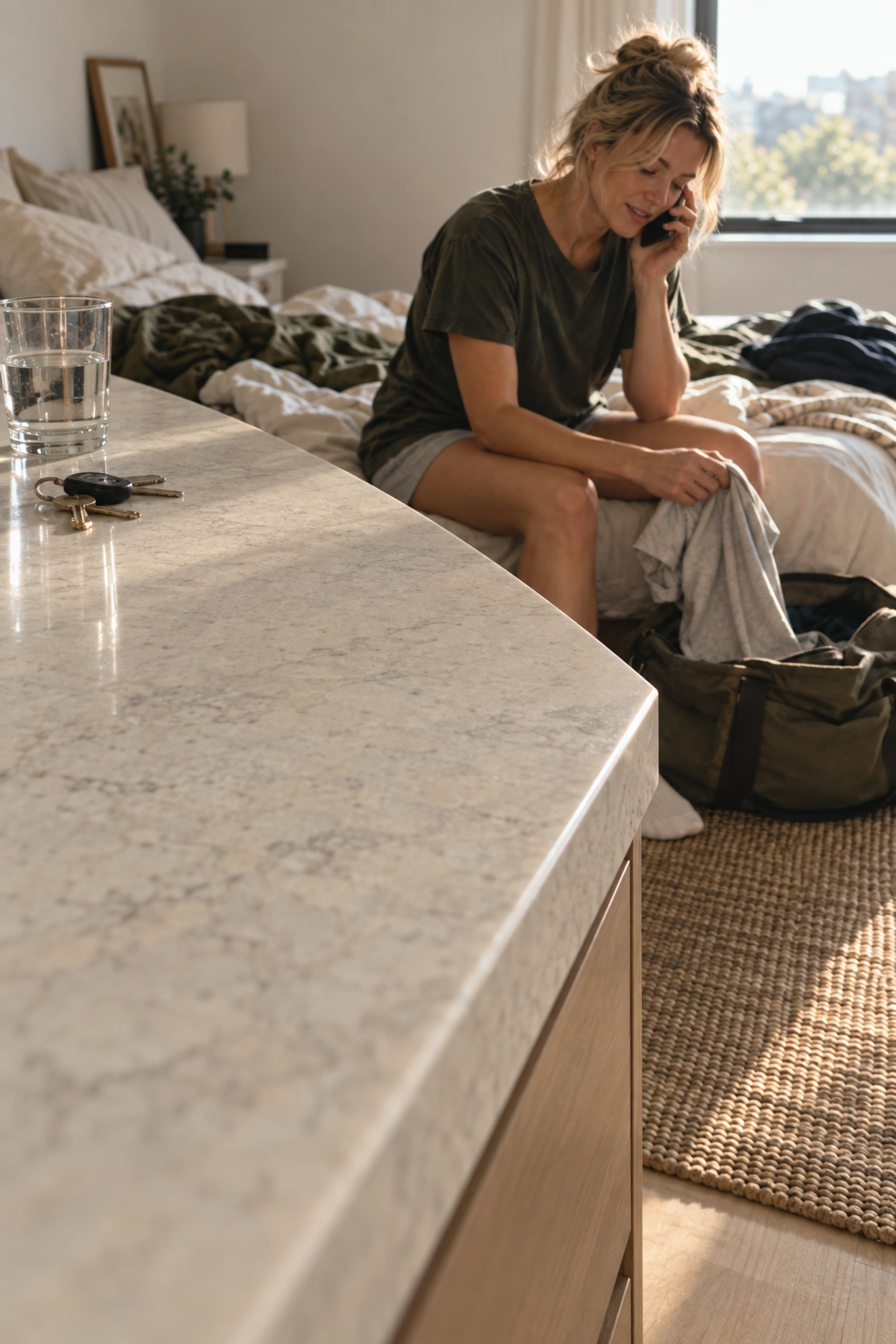
Granite, engineered quartz or PVC window sills: a comparison
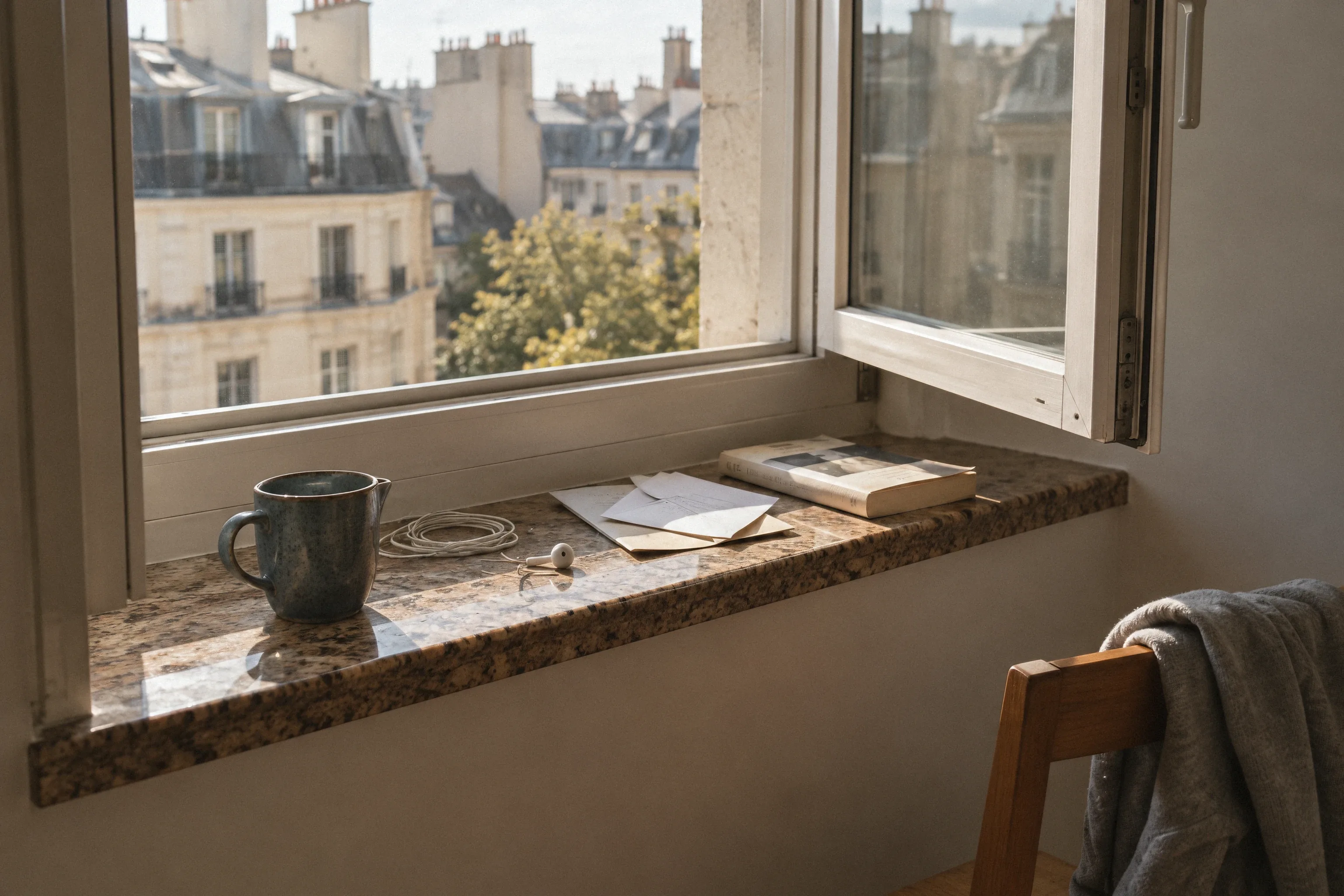
A granite window sill is the most resistant: it copes with sunlight, radiator heat, plant pots and years of use, and it also works outdoors. Engineered quartz works well indoors, but its resin does not like full sun. PVC is the cheapest, but it scratches easily and yellows over time.
A window sill works hard
It sits in full sun, above a radiator, under plant pots. People often sit on it too. It is a small element, but a very visible one.
Granite
Natural stone is not bothered by sunlight or radiator heat.1 It copes with moisture from plant pots and can be used outdoors. The pattern runs through the whole thickness, so after years the sill can be refreshed by grinding.
Engineered quartz
It has an even colour and is non-absorbent. The resin that binds the aggregate does not like UV rays and high temperatures, though.2 Indoors, by a window without harsh sun, it works well. Outdoors, it does not.
PVC
Light and cheap. It scratches, deforms with heat and yellows over time. For a narrow sill in a utility room it is enough, in a living room you see the difference.
Dimensions and fitting
We cut the window sill to the recess: depth, projection beyond the wall and edge profile. For a deep window seat we plan support. Outdoors, the sill needs a slope and a drip groove, so water does not run down the facade.
What to choose
- Living room, bedroom, window seat: granite.
- An interior with uniform, modern cabinetry: engineered quartz.
- Outdoors: granite.
(Sources)
-
Natural Stone Institute, Granite
-
Wikipedia, Engineered stone
(Questions)
Can an engineered quartz window sill sit in the sun?
Indoors usually yes, but by a south-facing window the resin may change shade after some years. We do not recommend it outdoors.
How deep can a window seat sill be?
As deep as the recess allows. For a large projection we plan the support and slab thickness.