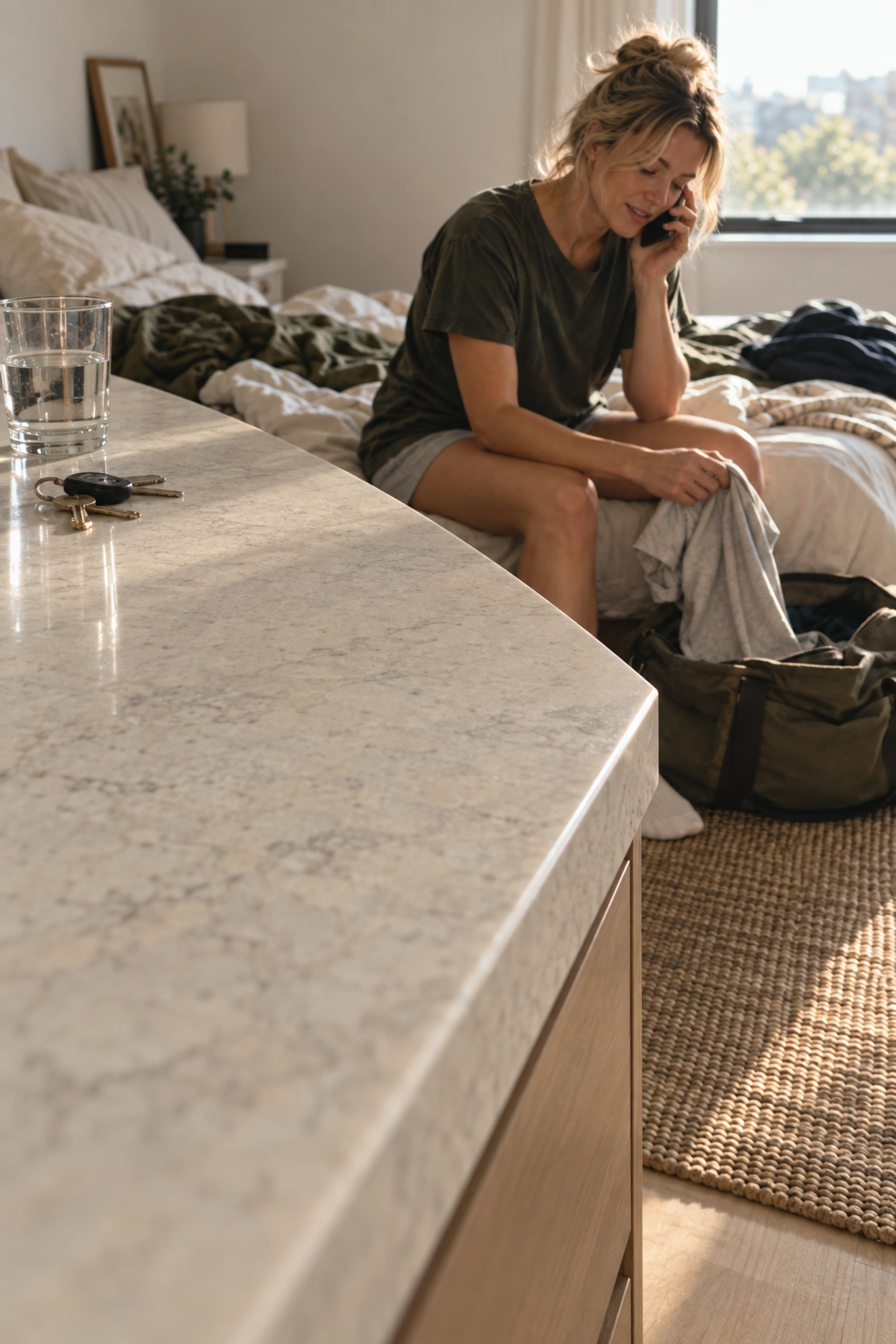
Stone in the bathroom: what works on a countertop and what on a wall
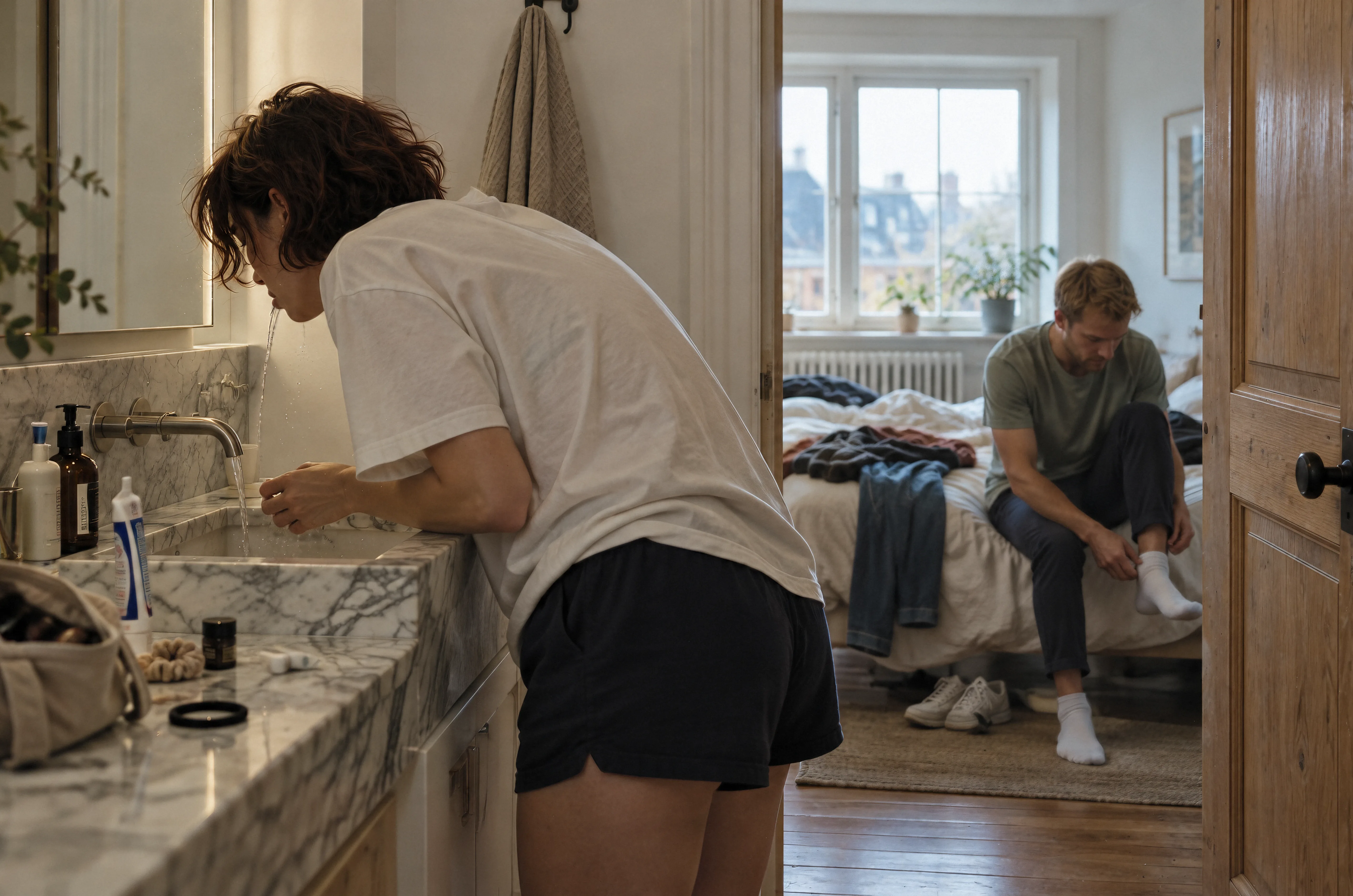
Granite, quartzite and sintered stone work well for a bathroom countertop, because they cope with water, cosmetics and cleaning products. Marble is possible, but needs care with acids and descalers. For walls and showers, large sintered stone slabs or a stone with low water absorption are the most common choice.
A bathroom means moisture and chemicals
In a bathroom, stone comes into contact with water, soap, cosmetics, hard water and cleaning products. Some of them are acidic, and that matters when you choose.
Vanity countertop
- Granite: resistant, easy to maintain, available in many colours.
- Quartzite: hard, acid resistant, with a pattern similar to marble.
- Sintered stone: non-absorbent, easy to clean.
- Marble: the most classic, but it reacts with acids and descalers. It needs wiping and pH-neutral products.1
Wall
On a wall, stone is not exposed to knocks, so the choice is wider. Large sintered stone slabs give a surface with almost no grout lines. Natural stone gives a pattern no printed design can repeat.
Shower
In a shower, what counts is low water absorption and resistance to limescale removers. Sintered stone and dense granites are the simplest. Marble is possible, but with sealing and gentle chemicals.
Floor
Stone on a bathroom floor should have a honed or brushed finish, so it is not slippery when wet.
One slab for both
A countertop and wall from the same slab look great, with the pattern running from one surface to the other. We plan this during the measurement visit.
(Sources)
-
Natural Stone Institute, Learn About Cleaning Products for Natural Stone
(Questions)
Is marble suitable for a shower?
Yes, but it needs sealing and gentle products. Descalers and acidic gels dull it.
Can a stone basin be made from a single piece?
Yes, we cut it from a block or glue it up from a slab. We choose based on the stone and the dimensions.